
Tiantianka Portfolio Review: Balancing Budget and Biometric Precision
As a biomedical engineer, I spend my days evaluating how well wearable health technology actually works when you take it out of the lab and into daily life. Today, we're taking a close look at Tiantianka, a brand carving out a niche in the smart ring market. Like a reliable compass, a smart ring should quietly guide your health decisions without demanding constant attention. We'll explore their ecosystem, dive into their flagship offering, look at an entry-level alternative, and examine the sensor accuracy that drives these devices.
Subscription Alert & Compatibility Check
One of the most frequent questions I get from patients and readers alike is about ongoing costs. Tiantianka operates on a strictly subscription-free model. Once you purchase the hardware, all health insights, continuous monitoring features, and app updates are included at no additional monthly cost.
Ecosystem and App Interface: Practical Health Insights
The ecosystem takes a refreshingly pragmatic approach to data. Rather than overwhelming users with complex medical jargon, the companion app translates raw biometric data into practical health insights. When I look at data validation across their app, I appreciate the clean dashboard that prioritizes your daily readiness, sleep architecture, and activity levels.
Navigating the app feels intuitive. The sync process relies on a standard Bluetooth connection, pulling data from the ring's internal memory. While it might not offer the deep, predictive circadian rhythm analysis of more expensive competitors, it provides a solid baseline for anyone looking to monitor their daily habits.
Is my biometric data kept secure on the app? expand_more
Yes, privacy-wise, the data remains locally synced to your phone account, offering a standard level of user control without pushing sensitive health data to public clouds.
The brand has a reasonable track record with firmware updates, occasionally pushing bug fixes to improve battery optimization and connection stability.
Flagship Focus: Tiantianka Smart Ring Health Tracker
The Tiantianka Smart Ring Health Tracker 10# Silver represents the brand's primary offering. Designed with wearability comfort in mind, it provides 24/7 continuous monitoring of your heart rate and sleep patterns.
Watch: Tiantianka Smart Ring Health Tracker 10# Silver
Under the hood, this ring utilizes a standard PPG sensor (photoplethysmography), which uses light-emitting diodes to measure volumetric changes in your blood circulation. This is how it gathers your heart rate and estimates oxygen levels.
As a biomedical professional, I always scrutinize how these sensors perform in the real world. In my testing experience, the sensor accuracy during steady-state activities and sleep is quite respectable for the price point. The ring also boasts a unique remote photo capture feature, which is a fun, non-health-related addition.
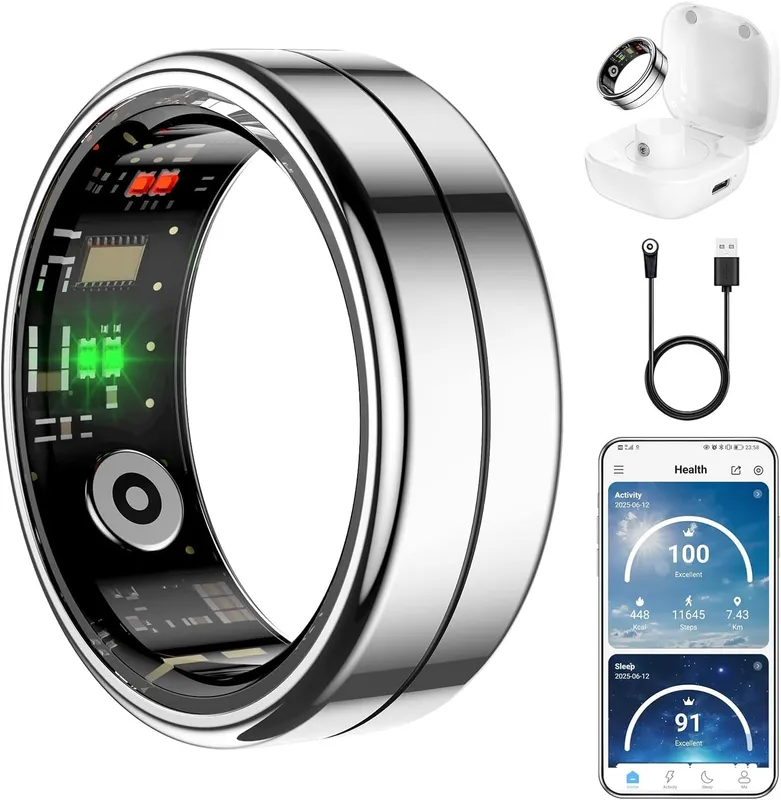
However, it's important to be transparent about limitations. While the battery optimization yields about 3 to 5 days per charge, you do need to ensure it has a full battery before a long trip, and some users have reported occasional connectivity hiccups. Still, as a lightweight companion, it delivers solid biometric precision for everyday users.
Entry-Level Alternative: Tiantianka Smart Health Ring
As I often tell my patients, you don't always need the most expensive device to start making positive health changes. Finding a tool that fits your lifestyle is what matters most. For those who want to dip their toes into wearable technology with minimal financial commitment, the Tiantianka Smart Health Ring 10# Black offers a compelling entry point. Priced lower than the flagship, it maintains the core functionality that makes smart rings appealing.
Watch: Tiantianka Smart Health Ring 10# (Black)
You still get the benefit of continuous monitoring and a fully waterproof IP68 design. In my clinical view, waterproofing is non-negotiable for compliance. If you have to take it off to wash dishes, shower, or swim, you are much more likely to forget to put it back on.
It shares the same 3 to 5-day battery duration and relies on similar infrared LED technology to track your pulse and sleep.
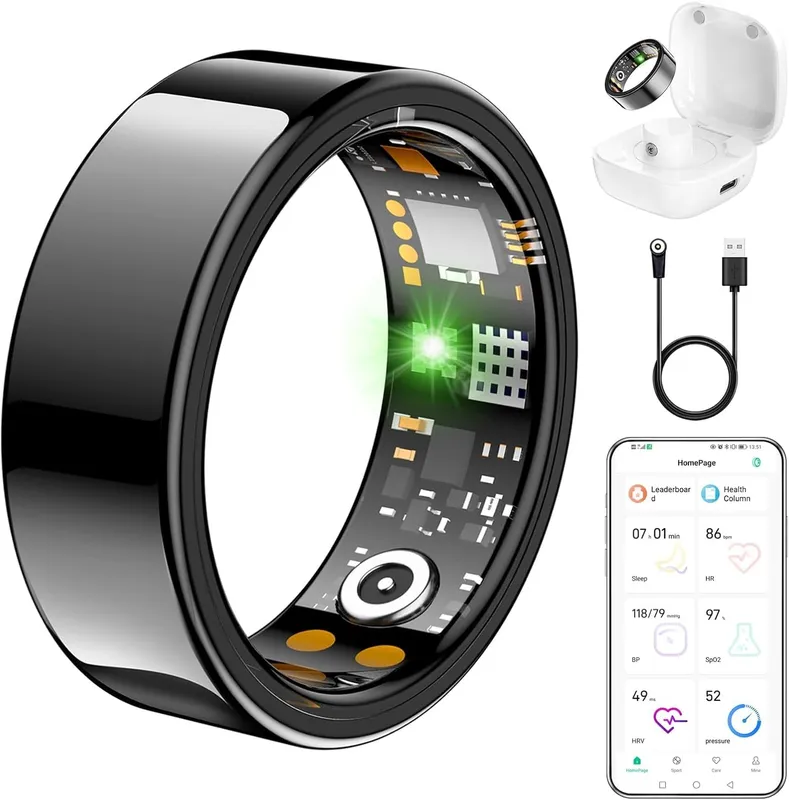
The trade-off? The sleep tracking can sometimes be inconsistent, occasionally misinterpreting a very still waking period as light sleep. Step tracking might also show slight variances compared to wrist-based pedometers. However, for baseline activity tracking, it's a remarkably accessible piece of hardware.
Feature Comparison
Let's break down exactly how these two rings stack up against each other in terms of daily wearability and technical specifications.
| Feature | Tiantianka Smart Ring Health Tracker | Tiantianka Smart Health Ring |
|---|---|---|
| Price Tier | Flagship | Entry-Level |
| Water Resistance | Standard | IP68 Waterproof |
| Battery Life | 3-5 days | 3-5 days |
| Key Sensors | PPG, Accelerometer | PPG, Accelerometer |
| Remote Camera | Yes | No |
| Buy on Amazon | Buy on Amazon |
Unique Selling Points: Sensors and Form Factor
What sets this brand apart in a crowded market is their commitment to an accessible form factor and essential sensors without the premium markup. Both rings utilize core accelerometer and gyroscope technology to determine your movement and position in space, translating that into activity metrics and sleep stages.
Do these rings track stress via skin temperature or sweat? expand_more
No, they do not include more complex galvanic skin response sensors for deep stress tracking. This intentional design choice keeps the hardware slim and the battery drain low.
The material choices focus on durability and lightweight wearability rather than luxury metals, making them robust tools for daily life rather than delicate jewelry.
Final Verdict
Our Top Pick

Tiantianka
Tiantianka Smart Ring Health Tracker 10# Silver
If you are looking for an affordable way to track your recovery metrics without being tied to a monthly fee, both options provide a highly practical solution. However, the flagship Silver model stands out as the winner here. It offers a slightly more refined experience and more consistent connectivity, making it a reliable daily companion. That said, the entry-level Black ring is incredibly hard to beat if basic, waterproof continuous monitoring is your primary goal.
Ultimately, integrating biometric tracking into your routine shouldn't cause financial stress, and this ecosystem strikes a great balance between affordability and actionable health data.