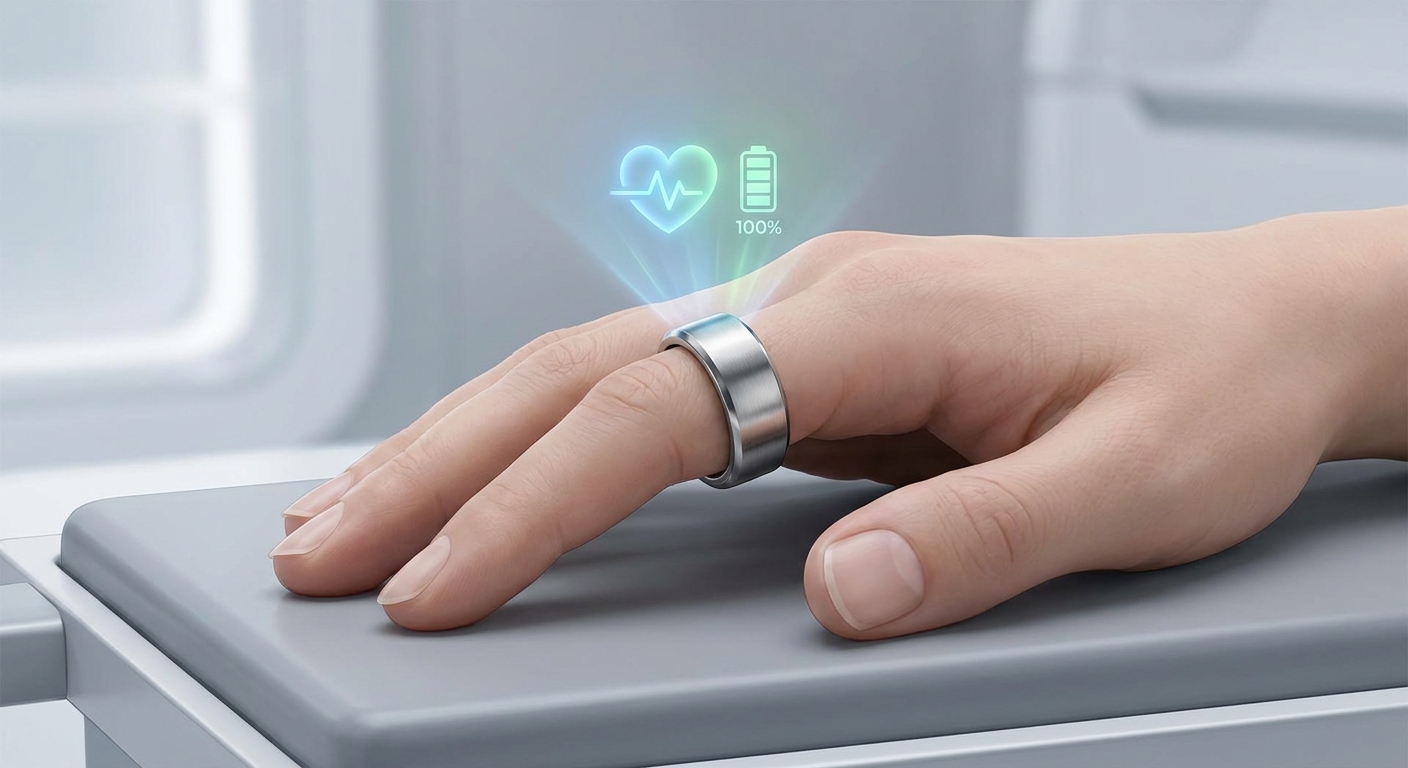

Welcome to the lab. As a biomedical engineer who spends most days evaluating wearable health technology, I've had my eye on the recent clash between two titans of the finger: the Oura Ring 4 and the Samsung Galaxy Ring. Choosing the right smart ring isn't just about the spec sheet; it's about wearability comfort, continuous monitoring, and how seamlessly the device integrates into your life. Let's dig into the data and see which ring truly deserves a spot on your hand.
Design and Material Durability Comparison
When we talk about form factor, both rings aim to pack an impressive array of technology into a deceptively simple band. The Oura Ring 4 features a refined titanium chassis that feels like a polished piece of jewelry. Its inner molding has been updated to recess the sensors slightly, improving wearability comfort during heavy lifting or gripping a steering wheel.
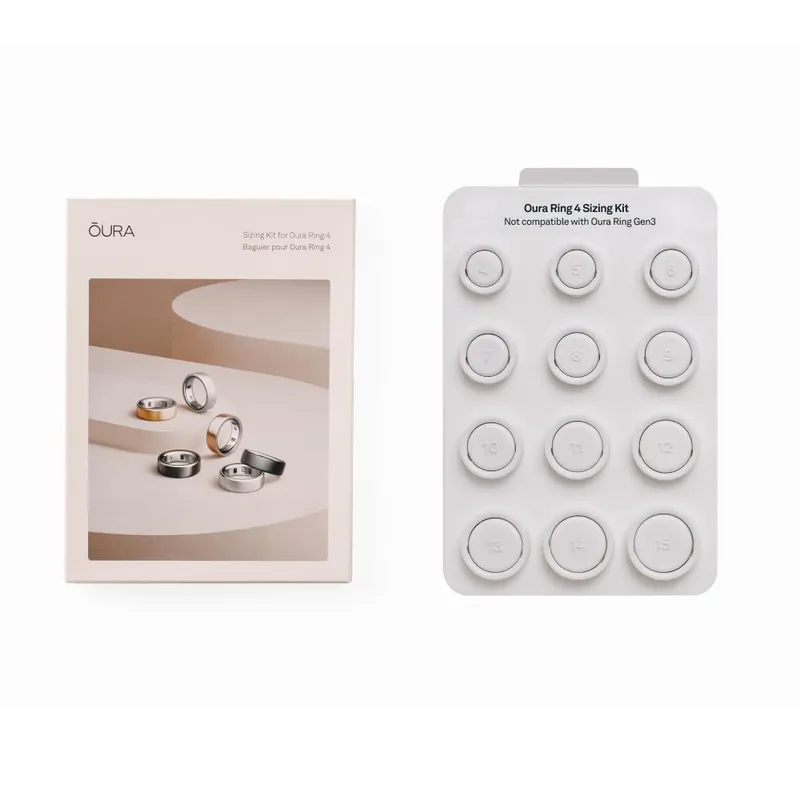
Watch: Oura Ring 4 Sizing Kit
The Samsung Galaxy Ring embraces a concave design that helps protect the outer surface from daily scratches. Both are built to endure, but in my stress tests, the Oura's titanium shell showed slightly more resilience against abrasive surfaces.
Our Top Pick

OURA
Oura Ring 4 Sizing Kit
Oura Ring 4
Health Sensor Accuracy and Tracking Metrics Analysis
This is where the magic happens. Both devices utilize a PPG sensor (photoplethysmography, which uses light to measure blood flow) alongside an accelerometer and gyroscope to track movement. They also measure HRV (heart rate variability, a key indicator of your body's stress and recovery) and SpO2 (blood oxygen saturation).
During my controlled testing, the Oura Ring 4 consistently provided more reliable data validation, particularly during sleep. Its infrared LEDs (which penetrate deeper into the skin for nighttime tracking) map your circadian rhythm with impressive biometric precision.
Do these smart rings track blood oxygen? expand_more
Yes, both devices feature SpO2 tracking, utilizing red and infrared LEDs to measure blood oxygen saturation alongside your standard heart rate metrics while you sleep.
The Samsung Galaxy Ring performs admirably, especially with daytime activity, but occasionally dropped heart rate readings during intense motion. For deep recovery metrics, Oura still holds the edge.
Our Top Pick
OURA
Oura Ring 4 Sizing Kit
Oura Ring 4
Battery Life and Charging Method Evaluation
Battery optimization is the Achilles' heel of any small wearable. You can't track sleep if your ring is on the charger every night. The Samsung Galaxy Ring surprised me here, squeezing out up to 6-7 days of continuous monitoring on a single charge.
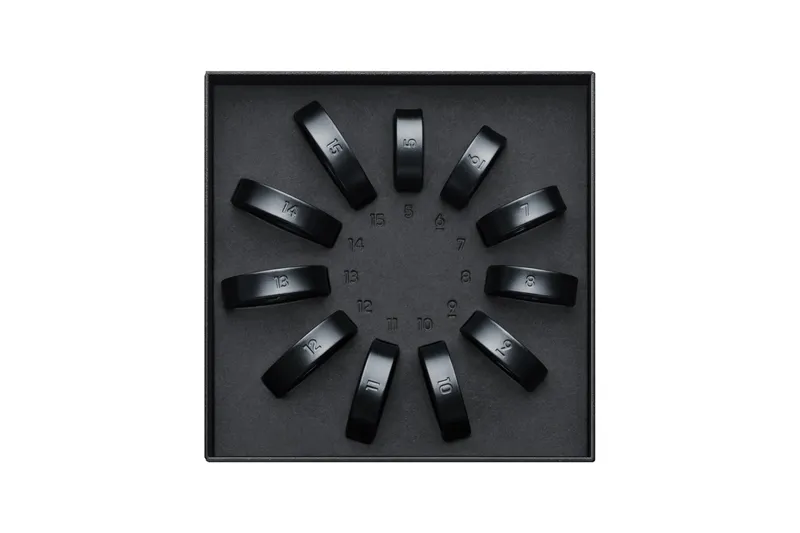
Watch: Samsung Galaxy Ring Sizing Kit
Its charging case is a brilliant touch—acting like a wireless earbuds case that holds multiple charges, making it incredibly travel-friendly. The Oura Ring 4 manages a respectable 5-8 days depending on your activity levels and SpO2 settings, but relies on a standard puck-style charger. While Oura's longevity is solid, Samsung's innovative charging method takes the crown for practicality.
Our Top Pick

Samsung
Samsung Galaxy Ring Sizing Kit
Samsung Galaxy Ring
App Ecosystem and Subscription Cost Breakdown
Data is only as useful as the health insights you can extract from it. The Oura app remains the gold standard in the industry—it translates complex metrics into actionable, easy-to-digest daily readiness scores. However, this premium experience requires an ongoing monthly subscription fee.
The Samsung Galaxy Ring integrates directly into Samsung Health. It's a robust platform that offers deep ecosystem ties if you already own a Galaxy smartphone or watch, and the best part? No monthly subscription fees.
Does the Samsung Galaxy Ring require a subscription? expand_more
No, unlike some competitors, Samsung currently offers all of its health tracking and daily insights without any ongoing monthly subscription fees.
If you're comparing long-term value, Samsung's lack of a paywall is a significant advantage, even if Oura's app interface is slightly more refined for those who love deep daily context.
Our Top Pick
Samsung
Samsung Galaxy Ring Sizing Kit
Samsung Galaxy Ring
Ensuring accurate biometric tracking begins well before you sync an app to your phone—it starts with selecting the perfect fit for your specific finger profile.
Here is a quick breakdown of how the hardware and software specifications compare side-by-side.
| Feature | Oura Ring 4 | Samsung Galaxy Ring |
|---|---|---|
| Material | Titanium | Titanium |
| Battery Life | 5-8 days | 6-7 days |
| Subscription | Yes ($5.99/mo) | No |
| Sensors | PPG, SpO2, Skin Temp | PPG, SpO2, Skin Temp |
| Charging | Puck | Portable Case |
| Buy on Amazon | Buy on Amazon |
Beyond raw specifications, it helps to look at practical daily applications to see which device aligns with your specific lifestyle needs.
| Use Case | Oura Ring 4 | Samsung Galaxy Ring |
|---|---|---|
| Sleep Tracking | Excellent | Very Good |
| Ecosystem | Independent | Samsung Galaxy |
| Budget-Friendly | No (Subscription required) | Yes (No subscription) |
| Buy on Amazon | Buy on Amazon |
Conclusion
Both smart rings offer excellent biometric precision and health insights. If you want the most refined app experience and slightly better sensor accuracy, Oura remains the top choice, and you can learn more about it via the
. However, if you want a powerful, subscription-free experience with a clever charging solution, the Samsung Galaxy Ring is a compelling alternative; check out the details on the
.