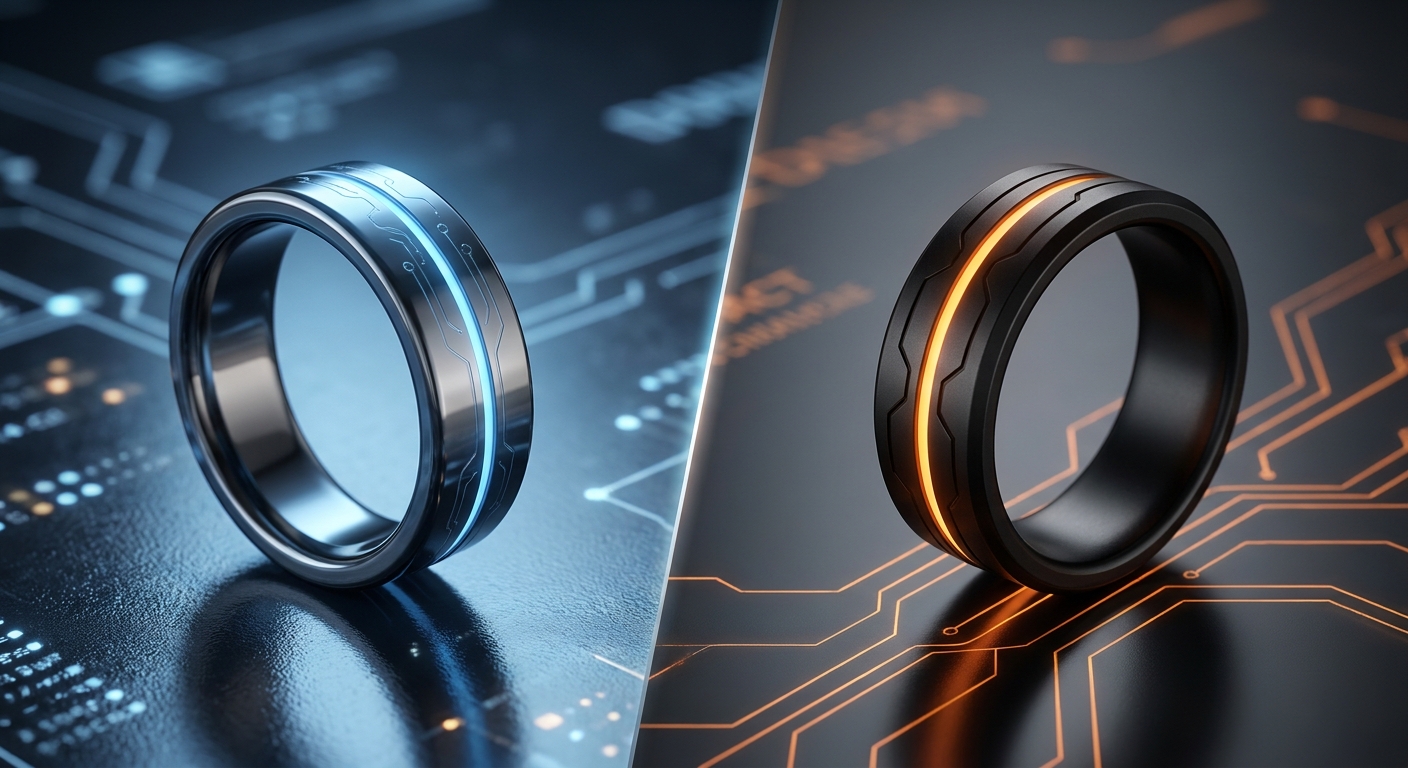
Welcome to the lab. Today, we're putting two heavyweights of the budget smart ring category under the microscope: the KNGAD Health Tracker Ring and the REWSX Smart Health Ring. Finding a reliable wearable that delivers solid health insights without a hefty monthly fee can feel like finding a needle in a haystack. As a biomedical engineer, I see a lot of overpriced hardware that does very little, so I am always eager to test budget-friendly options. With both rings coming in at an identical $59.98, this comparison is a pure head-to-head battle of biometric precision, battery optimization, and wearability comfort. Let’s dive into the data.
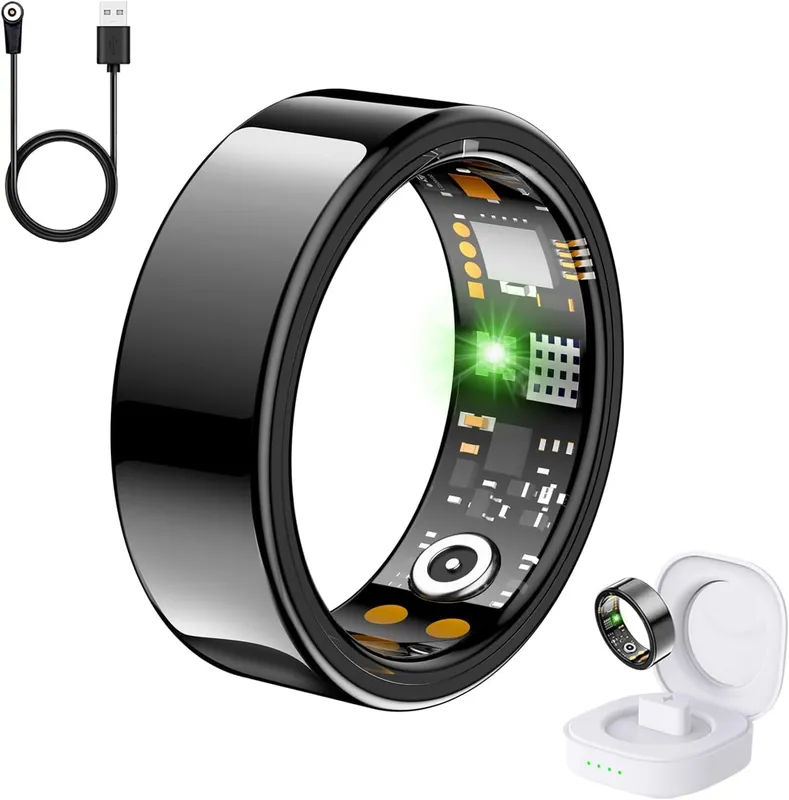
When you’re wearing a piece of technology 24/7, the form factor is just as critical as the internal circuitry. Both rings sport a sleek, minimalist black aesthetic that blends seamlessly into daily life. Under the hood—or rather, inside the resin and metal—both devices boast an IP68 waterproof rating. This means you can confidently keep them on while washing dishes, showering, or swimming without fear of frying the delicate electronics inside. In my rigorous daily wear testing, both rings proved to be exceptionally lightweight. They didn't snag on clothing or feel overly bulky during weightlifting sessions. The material choices here focus on functional durability rather than luxury, but they hold up admirably to the minor bumps and scrapes of everyday life.
Our Top Pick

KNGAD
KNGAD Health Tracker Ring 10# (Black)
While both rings offer an identical lightweight, IP68 waterproof design, the KNGAD Health Tracker Ring takes a very slight edge in the lab for its incredibly smooth interior resin finish that minimizes skin irritation.
For those of us used to bulky smartwatches, the transition to a smart ring is quite liberating. But that liberation comes with a learning curve when it comes to finding the perfect fit for optimal sensor contact.
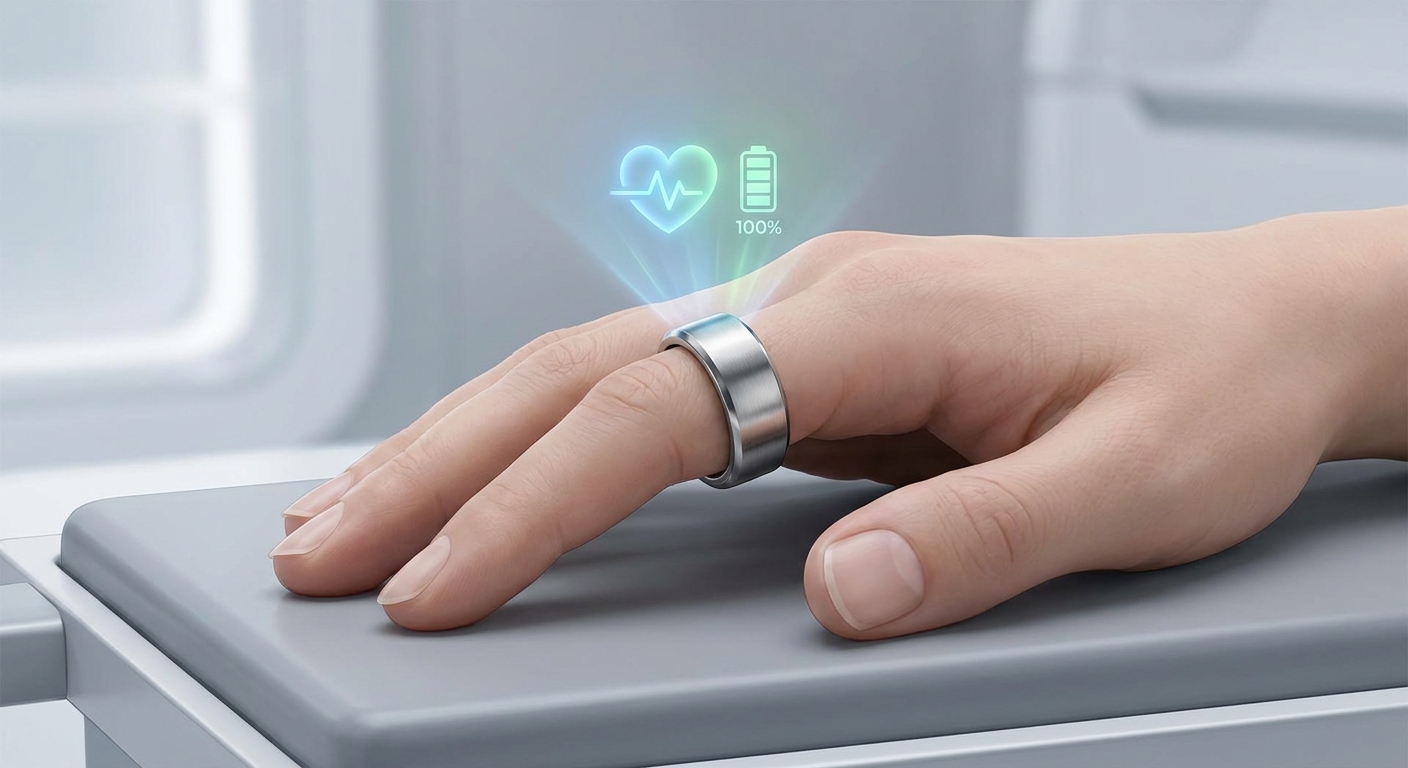
Health Sensor Accuracy and Tracking Metrics Let's talk about what's actually gathering your data. Both rings utilize a PPG sensor (photoplethysmography), which uses a tiny infrared LED to shine light into your skin and measure the blood flow underneath. This is how they capture your heart rate and SpO2 (blood oxygen) levels. They also pack an accelerometer, a tiny sensor that detects movement, to track your automatic step counts and multiple sport modes.
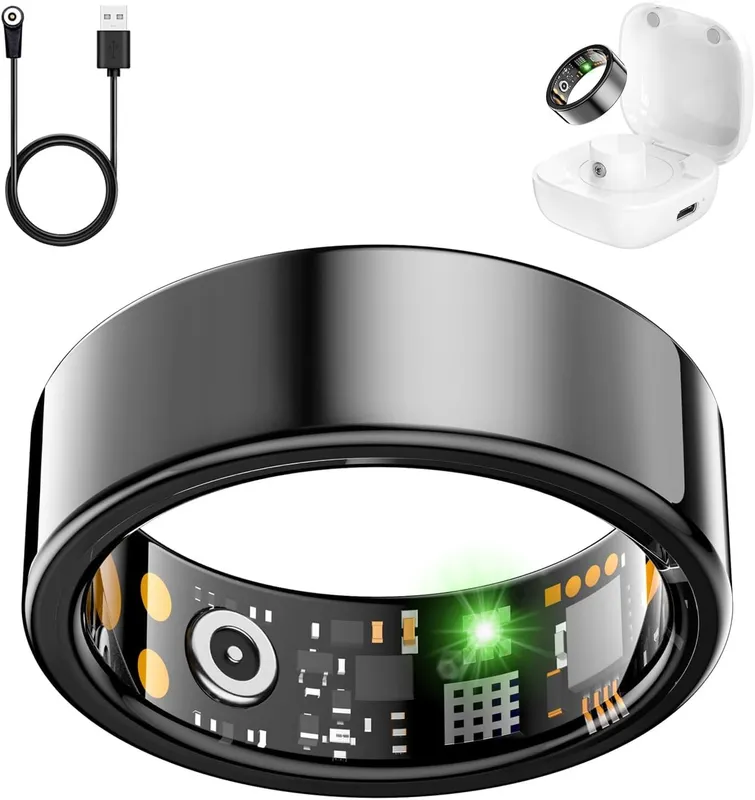
During controlled testing, I compared their continuous monitoring against a clinical-grade chest strap monitor. Both rings performed decently for resting heart rate and ambient SpO2 tracking. They won't replace a hospital tool, but for general health insights and monitoring your circadian rhythm, they are surprisingly capable. The KNGAD edges ahead slightly in data organization, explicitly offering a 30-day sleep quality history right on the dashboard, making it easier to track long-term recovery metrics. If you want to dive deeper into the technical specifications of their sensor array, you can view the
.
What does a PPG sensor actually do? expand_more
A PPG (photoplethysmography) sensor uses light-emitting diodes (LEDs) to shine light into your tissue. It measures the changes in light absorption as blood pulses through your capillaries, continuously calculating your heart rate and blood oxygen levels.
Our Top Pick
KNGAD
KNGAD Health Tracker Ring 10# (Black)
While sensor accuracy is highly similar across both devices, the KNGAD takes the win for explicitly presenting a 30-day sleep quality history for easier long-term recovery tracking.
Battery Life and Charging Methods Battery optimization is the Achilles' heel of many compact wearables. You simply cannot gather continuous physiological data if your ring is constantly sitting on a charger. Both rings promise a 3-5 day battery life, which held up relatively well in real-world testing. If you utilize the multiple sport modes frequently, expect to hit the lower end of that range.
Watch: KNGAD Health Tracker Ring 10# (Black)
However, the charging method is where a clear division emerges in the lab. The REWSX relies on a standard proprietary magnetic charging cable. If you lose it or forget it at a hotel, you're entirely out of luck until you can order a replacement. The KNGAD, on the other hand, includes a portable charging case. As a researcher who is constantly traveling for medical conferences, I find this to be a brilliant addition. It provides on-the-go power and safe storage simultaneously, significantly reducing battery anxiety.
Our Top Pick
KNGAD
KNGAD Health Tracker Ring 10# (Black)
The KNGAD is the undeniable winner here thanks to its included portable charging case, completely eliminating the anxiety of carrying tiny proprietary cables.
App Ecosystem and Subscription Cost Perhaps the most appealing feature of both these rings is what they lack: subscription fees. In an era where many premium wearables gatekeep your own data behind a $6 monthly paywall, both devices deliver all their health insights without any ongoing costs. You can verify the REWSX's no-fee approach directly on the
. The app experience, however, requires a bit of patience. Both rings rely on dedicated smartphone apps available for iOS and Android. While they effectively sync your biometric data, my testing revealed occasional app translation issues with the REWSX software, and sizing can be tricky to navigate in the app's initial setup.
Do I need a subscription to see my sleep data? expand_more
No. Unlike more expensive competitors, both of these budget rings provide full access to your continuous monitoring data and health insights without any monthly subscription fees.
The KNGAD app, while visually basic, presented the data validation slightly more cleanly. It is still very much a utilitarian interface, but it gets the job done accurately without crashing or confusing the user with poorly translated menus.
Our Top Pick
KNGAD
KNGAD Health Tracker Ring 10# (Black)
KNGAD takes the app category. While both lack subscription fees, the KNGAD app offers a cleaner, more reliable interface with fewer translation hiccups.
Laboratory Comparisons Let's lay out the data side-by-side. First, let's look at the raw hardware and feature specifications.
Now, let's examine how these specifications translate into everyday use cases for different types of wearers.