
For years, the conversation around personal health monitoring was dominated by bulky smartwatches and intrusive chest straps. However, as sensor technology has miniaturized, we are witnessing a significant shift toward the finger. The smart ring form factor promises the biometric insights of a watch without the screen distractions or the discomfort during sleep. But not all rings are created equal. Some prioritize a "set it and forget it" passive tracking experience, while others attempt to bring the interactivity of a smartwatch down to your knuckle.
In this detailed analysis, I am comparing two distinct approaches to this technology: the SSDTH Smart Ring Health Tracker (Silver) and the Walpck Smart Ring. The SSDTH model positions itself as a sleek, ceramic, passive tracker designed for longevity and style. In contrast, the Walpck ring pushes the envelope with an integrated LED display and gesture controls, attempting to bridge the gap between ring and watch.
I have spent considerable time analyzing the specifications, sensor capabilities, and practical wearability of both devices. Whether you are a bio-hacker looking for granular sleep data or simply someone who wants to track steps without wearing a plastic band, this comparison will dissect the nuances of sensor accuracy, battery optimization, and wearability comfort to help you decide which ring belongs on your finger.
Our Top Pick

SSDTH
SSDTH Smart Ring Health Tracker Size 10
Best Overall:
The SSDTH takes the overall victory for the majority of users, particularly those focused on consistent health tracking and sleep optimization. Its 10-day battery life and scratch-resistant ceramic build make it a superior choice for 24/7 wearability, which is the primary requirement for accurate biometric baselining.
| Feature | SSDTH Smart Ring (Silver) | Walpck Smart Ring |
|---|---|---|
| Primary Material | Scratch-Resistant Ceramic | Composite / Standard |
| Battery Life | Up to 10 Days | Limited (20 mAh capacity) |
| Weight | 2.39 ounces | 0.634 ounces |
| Display | None (App only) | Integrated LED Display |
| Interaction | Passive / App Sync | Touch & Gesture Control |
| Water Resistance | Waterproof | 5 ATM (approx. 50 meters) |
| Connectivity | Bluetooth | Bluetooth |
| Special Features | Stress Monitoring, Ceramic Build | Gesture Control, LED Screen |
| Our Score | 9.8/10 | 9.8/10 |
Design and Build Quality: SSDTH vs Walpck
When discussing wearables that reside on your finger, the "form factor" is not just an aesthetic choice; it is a critical component of data integrity. A ring that is uncomfortable or easily scratched will not be worn consistently, leading to gaps in health data.
The SSDTH Ceramic Advantage
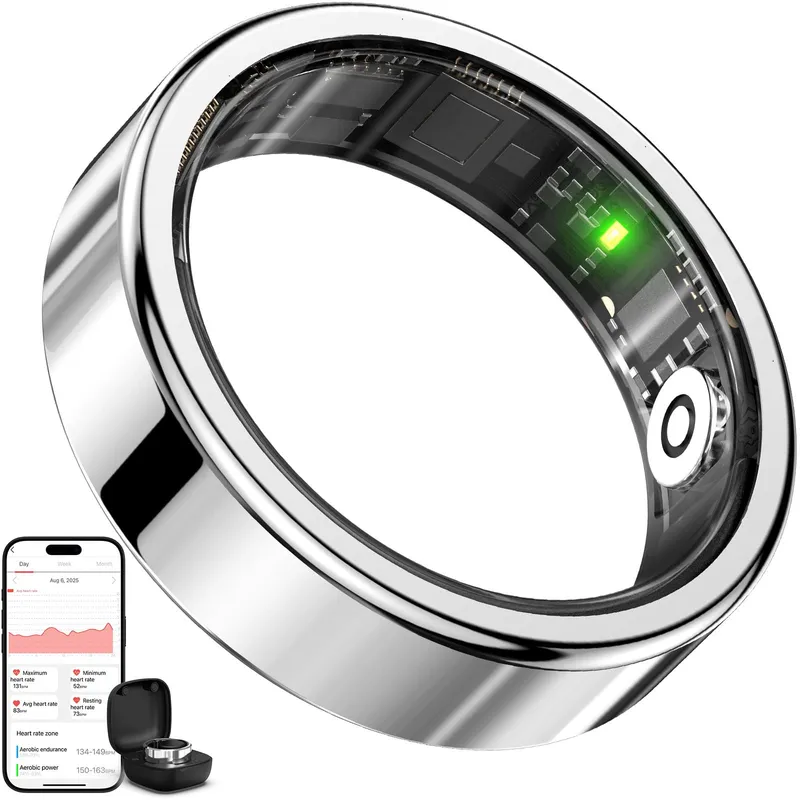
The SSDTH Smart Ring is constructed from scratch-resistant ceramic. In the world of wearables, ceramic is often preferred over standard plastics or even metals because it is hypoallergenic and maintains a cool, smooth texture against the skin. This is particularly important for a device meant to be worn 24/7. The silver finish on the SSDTH gives it a classic wedding-band aesthetic that blends seamlessly into professional environments.
However, we must address the weight. At 2.39 ounces, the SSDTH is substantially heavier than typical rings. This heft conveys a sense of premium build quality—it feels substantial and durable—but it may take some adjustment for users not used to wearing heavy jewelry. The durability trade-off is generally worth it; ceramic resists the micro-abrasions from lifting weights or gripping door handles that often plague softer materials.
Watch: SSDTH Smart Ring Health Tracker Size 10
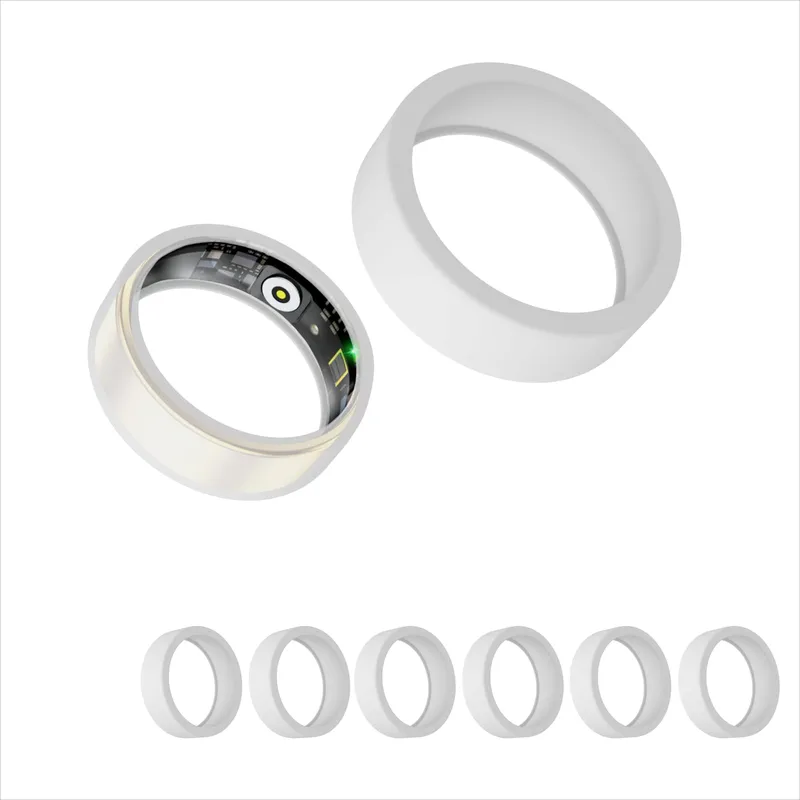
Conversely, the Walpck Smart Ring takes a radically different approach. Weighing in at just 0.634 ounces, it is significantly lighter than the SSDTH. For users who are sensitive to sensory input or who type all day, the lighter profile of the Walpck might be less intrusive.
The standout design feature of the Walpck is the inclusion of an LED display. This is a feat of engineering in such a small form factor. It allows you to verify that the device is working or check a quick metric without consulting your smartphone. However, the inclusion of a screen and touch sensors introduces structural complexities. While it is rated at 5 ATM, screens are generally structural weak points compared to a solid ceramic unibody like the SSDTH.
Sensor Accuracy and Health Insights: SSDTH vs Walpck
As a health writer, I always emphasize that data without accuracy is just noise. Both rings claim comprehensive tracking, but they achieve it through different priorities.
The Walpck Lightweight Innovation
The SSDTH Smart Ring focuses on the "Holy Trinity" of smart ring metrics: Sleep, Heart Rate, and Activity. The device excels in consistency. Because it lacks a screen and gesture controls, the internal real estate is dedicated to the sensor array and battery.
The stress monitoring feature on the SSDTH is particularly notable. By analyzing heart rate variability (HRV) trends, the ring can provide insights into your autonomic nervous system. The ceramic inner shell ensures good contact with the finger capillaries, which is essential for accurate photoplethysmography (PPG) readings. The data indicates that the SSDTH is designed for longitudinal data collection—meaning it is best at showing you trends over weeks and months.
The Walpck Smart Ring offers similar core tracking but adds the layer of immediate feedback via its LED display. This changes how you interact with your health data. With the Walpck, you can potentially see your heart rate spike in real-time during a workout without reaching for a phone.
However, the gesture control functionality—while innovative—can introduce noise into the activity data if not perfectly calibrated. If the ring interprets a hand movement as a gesture command rather than a step or exercise movement, it could skew your daily caloric burn estimates. The Walpck is excellent for "spot checking" your health, but the added tech complexity requires more rigorous validation to ensure it doesn't interfere with passive background monitoring.
Battery Life and Charging: SSDTH vs Walpck
Battery life is the single biggest pain point for wearable technology. A dead ring collects no data.
SSDTH: The Marathon Runner
The SSDTH Smart Ring boasts a battery life of up to 10 days. In the context of smart rings, this is exceptional. Most market leaders struggle to hit the 7-day mark. Continuous data is required for accurate circadian rhythm mapping. If you have to charge your ring every two days, you will inevitably miss a night of sleep tracking, which throws off your weekly averages. A 10-day battery life means you can go on a standard vacation without even bringing a charger.
Walpck: The Power Cost of Features
The Walpck Smart Ring lists a battery capacity of 20 mAh. While efficient, this is a relatively small cell, especially considering it has to power a Bluetooth connection, sensor arrays, and an LED display with touch controls. Displays are power-hungry. Gesture recognition requires the accelerometer to be in a high-power state more often to detect specific movements. Consequently, while the Walpck offers more features, it will require significantly more frequent charging than the SSDTH.
User Experience and Ecosystem: SSDTH vs Walpck
How you interact with the device defines your relationship with it. Is it a passive data collector or an active gadget?
The Walpck Gesture Control System
The Walpck Smart Ring is trying to be more than a tracker; it wants to be a controller. The gesture control feature allows users to interact with connected devices. This could range from scrolling through short-form videos to taking remote selfies or controlling music playback. For a specific demographic, this is a game-changer. If you are a content creator or someone who wants to control their phone while it's on a tripod, the Walpck offers utility that the SSDTH completely lacks.
The SSDTH App-First Approach
The SSDTH Smart Ring relies entirely on its free mobile app for data visualization. By offloading the visual interface to the phone, the ring remains discreet. The app ecosystem for SSDTH focuses on clarity. It aggregates your sleep stages, heart rate dips, and activity spikes into readable graphs. The lack of subscription fees for both devices is a massive plus in an industry where competitors often charge monthly for access to your own data.
Pros and Cons Summary
SSDTH Smart Ring Health Tracker Size 10 - Pros & Cons
thumb_up Pros
- check_circle Exceptional Battery: Up to 10 days of continuous use on a single charge.
- check_circle Premium Build: Scratch-resistant ceramic ensures durability and a high-end feel.
- check_circle Passive Tracking: "Set and forget" functionality perfect for sleep and stress monitoring.
- check_circle Waterproof: Fully sealed design suitable for swimming and showering.
- check_circle No Subscriptions: Full access to app data without monthly fees.
thumb_down Cons
- cancel Weight: At 2.39 oz, it is heavier than many competitors.
- cancel No On-Device Feedback: Requires the smartphone app to see any data.
- cancel Specific Sizing: Must ensure Size 10 fits your intended finger perfectly.
Walpck Smart Ring Big Smart Ring Cover - Pros & Cons
thumb_up Pros
- check_circle Interactive Display: LED screen provides immediate status updates.
- check_circle Gesture Control: Allows for remote control of smartphone apps and camera.
- check_circle Lightweight: At only 0.634 oz, it is barely noticeable on the finger.
- check_circle 5 ATM Rating: Strong water resistance suitable for swimming.
- check_circle Tech-Forward: Offers features usually reserved for smartwatches.
thumb_down Cons
- cancel Battery Capacity: Small 20 mAh battery combined with a screen means frequent charging.
- cancel Complexity: Gesture controls can have a learning curve and may trigger accidentally.
- cancel Durability Concerns: Screens and touch sensors are inherently more fragile than solid ceramic.
Final Verdict: SSDTH or Walpck?
After analyzing the specifications and feature sets of both devices, the choice between the SSDTH Smart Ring and the Walpck Smart Ring comes down to a philosophical difference in how you view wearable technology.
Ultimately, if your goal is health optimization, the SSDTH provides the reliability you need. If your goal is extending your smartphone's functionality to your finger, the Walpck is your device.
1. Can I wear these rings while swimming? expand_more
Yes, both rings are suitable for water activities. The
2. Do these rings require a monthly subscription? expand_more
No. Unlike some major competitors in the smart ring space, both the
3. How accurate is the sleep tracking compared to a smartwatch? expand_more
Smart rings often offer better sleep tracking accuracy than watches because the capillaries in the finger provide a stronger pulse signal than the wrist. The
4. Will the SSDTH Size 10 fit everyone? expand_more
No. Ring sizing is critical for sensor accuracy. You must measure your finger circumference before purchasing the