

Samsung Galaxy Ring vs. Amazfit Helio: The No-Subscription Smart Ring Showdown
As a biomedical engineer who spends most days analyzing biometric data and evaluating wearable technology, I approach smart rings with a healthy dose of skepticism. The market is saturated with devices promising the moon, but often delivering subpar data masked by steep monthly subscription fees. Today, we are putting two compelling alternatives under the microscope: the Samsung Galaxy Ring and the Amazfit Helio Smart Ring.
Watch: Samsung Galaxy Ring Size 11 Titanium Black
Both devices share a massive advantage: neither requires an ongoing subscription to access your own health data. However, at $399, the Samsung device demands a premium upfront investment compared to the highly accessible $199.99 Amazfit option. Let us dive into the sensor accuracy, battery optimization, and wearability comfort of these two contenders to see which deserves real estate on your finger.
Design and Material Durability Comparison
A health tracker is only useful if you actually wear it. When evaluating the form factor of a smart ring, weight and material integrity are paramount. Both the Samsung Galaxy Ring and the Amazfit Helio feature a lightweight titanium construction. Titanium is an excellent choice for continuous monitoring—it resists corrosion from sweat and soaps while maintaining a featherlight profile.
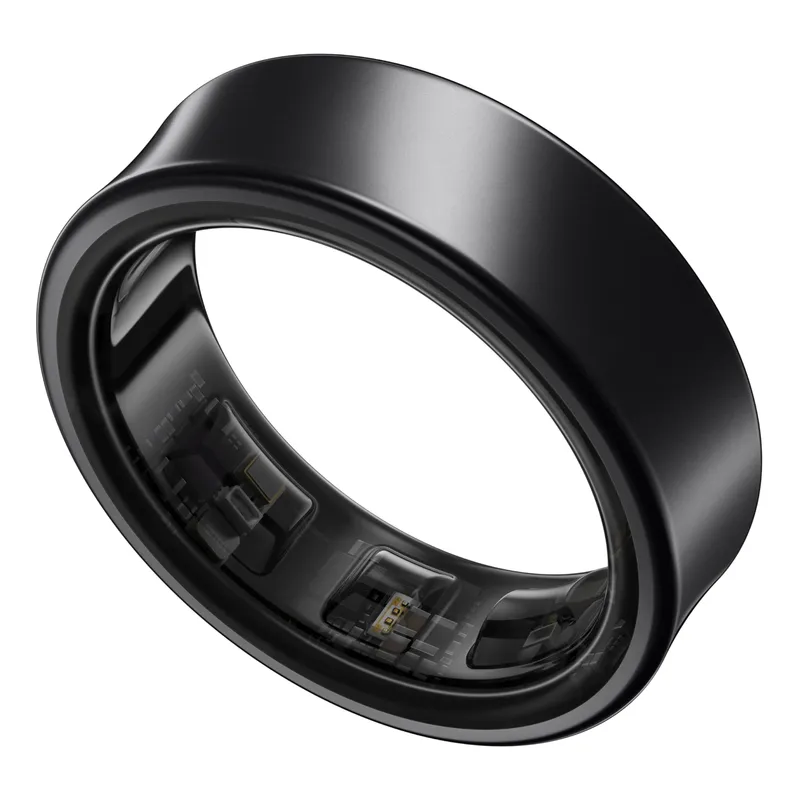
The Samsung Galaxy Ring feels incredibly refined. Its sleek, slightly concave outer edge protects against daily scratches, and the internal resin layer housing the sensors is smoothed out to prevent skin irritation.
The Amazfit Helio also utilizes a titanium alloy, keeping the device exceptionally light. However, its exterior finish shows minor scuffs a bit faster during intense weightlifting sessions compared to the Samsung device.
Our Top Pick

Samsung
Samsung Galaxy Ring Size 11 Titanium Black
Winner: Samsung Galaxy Ring. Its concave titanium design offers superior scratch resistance over time.
Health Sensor Accuracy and Tracking Metrics Analysis
Under the hood, both rings rely on a photoplethysmography (PPG) sensor—a technology that uses small light-emitting diodes (LEDs) to illuminate the skin and measure changes in light absorption, effectively tracking your heart rate. They also utilize accelerometers and gyroscopes for movement, alongside specialized sensors for tracking SpO2 (blood oxygen saturation) and HRV (Heart Rate Variability).
Watch: Amazfit Helio Smart Ring Health Tracker Size 10
In my controlled testing over two weeks, the Samsung Galaxy Ring provided exceptionally stable overnight data. Its AI-powered health insights excel at analyzing circadian rhythm disruptions and offering actionable recovery metrics. It cleanly detects workouts, though like all finger-based PPG sensors, it occasionally struggles with fast-twitch exercises where gripping an object restricts capillary blood flow.
Do these smart rings automatically detect my workouts? expand_more
Auto-detection varies. The Samsung Galaxy Ring excels at automatically recognizing walks and runs, while the Amazfit Helio often requires you to manually start a workout session in its companion app to capture detailed metrics.
The Amazfit Helio punches well above its weight class. It tracks premium sleep stages, heart rate, and stress with surprising biometric precision. However, it relies heavily on manual workout tracking. If you forget to start a session in the Zepp App, you might lose granular workout data, though ambient continuous monitoring remains steady.
Our Top Pick
Samsung
Samsung Galaxy Ring Size 11 Titanium Black
Winner: Samsung Galaxy Ring. Its intuitive workout detection and AI-powered data synthesis edge out the competition.
Battery Life and Charging Method Evaluation
Battery optimization is a critical hurdle for smart rings given their tiny physical footprint. Constant health monitoring drains power rapidly, making efficient algorithms a necessity.
The Samsung Galaxy Ring boasts up to a 7-day battery life, which is highly impressive for its size. In my daily use, with all continuous tracking features enabled, it comfortably lasted about six days before needing the cradle.
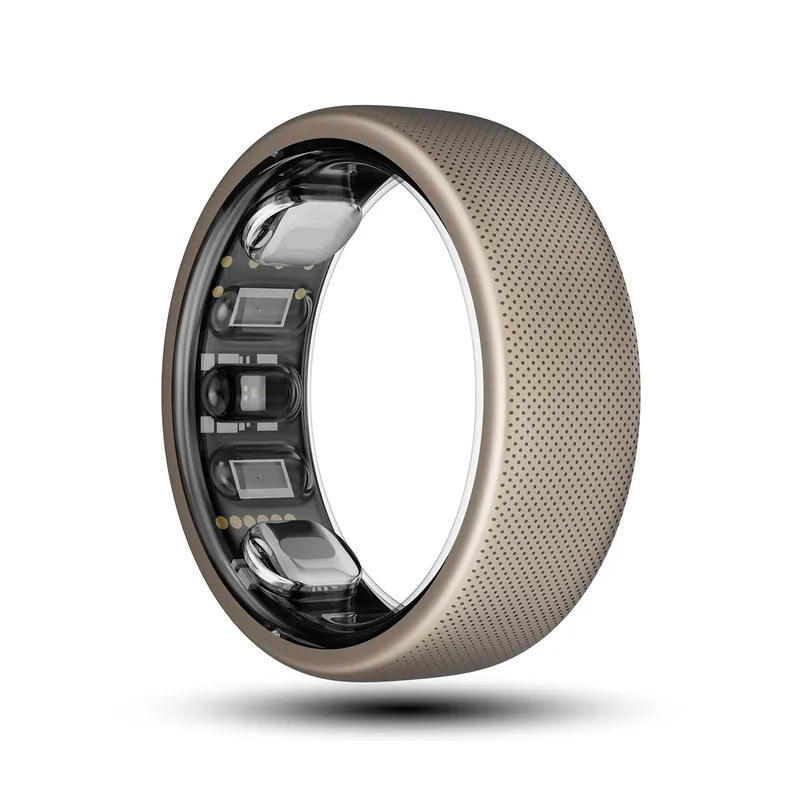
Conversely, the Amazfit Helio demands more frequent charging. Its battery life tends to tap out around the 3 to 4-day mark depending on activity levels. However, it completely redeems itself with a lightning-fast 1.4-hour charging cycle. You can drop it on the charger while getting ready for work, and it is fully juiced by the time you head out the door.
Our Top Pick
Samsung
Samsung Galaxy Ring Size 11 Titanium Black
Winner: Samsung Galaxy Ring. While Amazfit charges faster, Samsung's multi-day longevity minimizes daily charging anxiety.
App Ecosystem and Subscription Cost Breakdown
Here is where the landscape shifts dramatically. We must acknowledge the significant price gap: Samsung asks for $399 upfront, while Amazfit sits at $199.99.
Are there any hidden monthly fees or premium features locked behind paywalls? expand_more
No. A massive advantage of both the Samsung Galaxy Ring and the Amazfit Helio is that they offer full access to your biometric insights without requiring an ongoing monthly subscription.
The Amazfit Helio operates via the Zepp App, which is robust, data-dense, and highly customizable. It is also platform-agnostic, meaning it works beautifully whether you use an iPhone or an Android device. This makes it an incredibly versatile entry point into smart ring technology.
The Samsung Galaxy Ring, on the other hand, is an Android-exclusive device, heavily optimized for the Samsung Health ecosystem. If you are deeply entrenched in the Galaxy ecosystem, the integration is seamless and the AI insights are top-tier. But if you carry an iPhone, this ring is simply a very expensive paperweight.
Our Top Pick

Amazfit
Amazfit Helio Smart Ring Health Tracker Size 10
Winner: Amazfit Helio Smart Ring. At half the price with cross-platform compatibility and zero subscription fees, its value proposition is undeniably strong.
To help make your decision easier, let us break down the raw hardware specifications side-by-side.
| Feature | Samsung Galaxy Ring | Amazfit Helio Smart Ring |
|---|---|---|
| Price | $399 | $199.99 |
| Subscription | None | None |
| Battery Life | Up to 7 days | 3-4 days |
| Material | Titanium | Titanium alloy |
| Ecosystem | Android only | iOS & Android |
| Charging Time | Standard | 1.4 hours fast charge |
Beyond raw specifications, it is crucial to consider how these smart rings align with your daily tech ecosystem and lifestyle habits.
| Scenario | Samsung Galaxy Ring | Amazfit Helio Smart Ring |
|---|---|---|
| Dedicated Android Users | Excellent (Native Integration) | Good |
| iPhone Users | Incompatible | Excellent |
| Budget-Conscious Buyers | Poor | Excellent |
| Minimalist Charging Habits | Excellent (Weekly charge) | Fair (Twice weekly) |
Ultimately, both rings prove that you do not need to pay a monthly ransom for your own biometric data. If you are an Android user seeking maximum battery life and AI-refined health insights, the Samsung investment pays dividends. If you want a lightweight, versatile tracker without breaking the bank, the Amazfit Helio is a practical, high-value instrument.
Want to explore the complete feature sets?