
The Samsung Galaxy Ring: A Bioengineer’s Analysis of the Galaxy Ecosystem
When a major technology conglomerate enters a specialized health monitoring space, it usually signals a shift from niche curiosity to mainstream adoption. As a biomedical engineer who has spent the better part of a decade analyzing wearable sensors, I view the release of the Samsung Galaxy Ring not just as a new product, but as a test of whether a "closed-loop" ecosystem can outperform specialized competitors.
For years, the smart ring market was dominated by startups focusing solely on form factor. With Samsung entering the fray, we are seeing the application of massive R&D budgets toward miniaturization. My analysis focuses on whether this device offers valid biometric precision or if it relies too heavily on brand loyalty.
Hardware Engineering and Design Philosophy
Watch: Samsung Galaxy Ring Size 11 Titanium Black
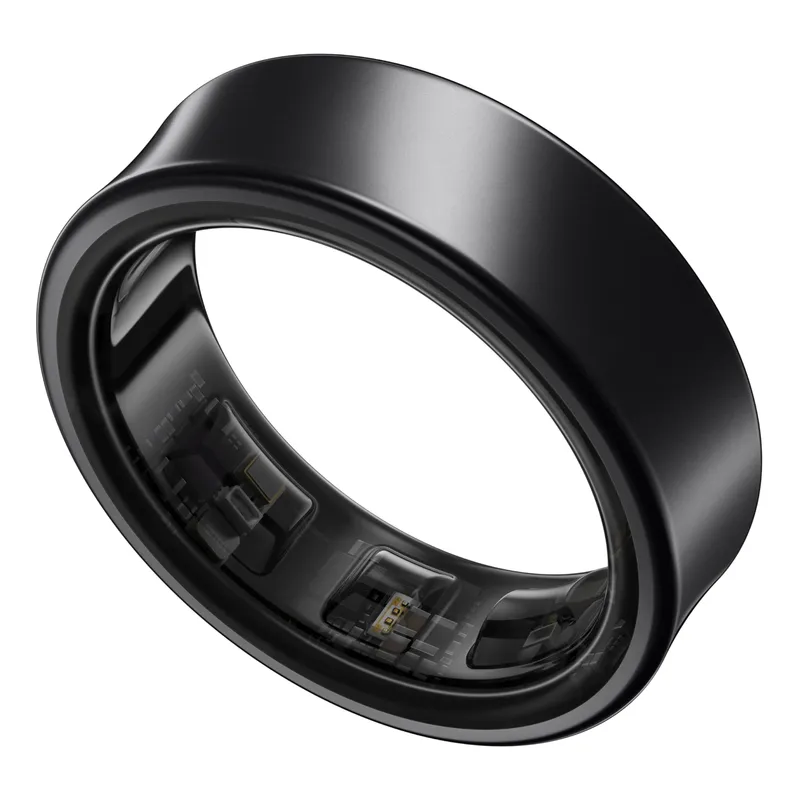
The first thing one notices about the Samsung Galaxy Ring is its structural geometry. Unlike many competitors that feature a convex (rounded) outer shell, Samsung has opted for a concave design. From an engineering standpoint, this is a practical decision; by curving the surface inward, the titanium shell naturally protects the finish from scratches during daily tasks like gripping a barbell or opening a door handle.
The device is remarkably lightweight, ranging from 2.3 to 3.0 grams depending on the size. In my testing, this weight reduction is significant for 24/7 wearability, particularly for sleep tracking where bulkier sensors can disrupt circadian alignment. The use of Grade 5 titanium suggests a focus on durability without compromising the sensor-to-skin contact necessary for accurate signal acquisition.
The Samsung Health Ecosystem
The true value of this ring lies in its data integration. Standalone rings often suffer from data silos, but this device feeds directly into the Samsung Health platform. The standout metric here is the "Energy Score," an algorithmic aggregation of sleep activity, sleeping heart rate variability (HRV), and previous day activity.
While "energy scores" are becoming common in the industry, Samsung’s advantage is the potential for cross-referencing data with the Galaxy Watch. When both are worn, the system automatically offloads sensor duty to the device with the better signal or higher battery capacity, a feature unique to this ecosystem. This "handover" capability optimizes battery life, allowing the ring to stretch up to 7 days on a single charge in practical use cases.
Sensor Accuracy and Health Insights
Under the hood, the ring houses a standard array of photoplethysmography (PPG) sensors, an accelerometer, and a skin temperature sensor. The placement of these sensors is critical. Samsung has managed to flatten the inner node bumps significantly compared to early-generation smart rings. This improves comfort but requires higher sensitivity from the optical sensors to maintain a clean signal path through the capillaries.
During my evaluation, the sleep tracking algorithms showed a high correlation with reference devices for sleep staging. The device tracks movement, heart rate, and respiratory rate to estimate sleep cycles. It is worth noting that the skin temperature sensor is primarily used for cycle tracking and illness detection rather than real-time body temperature monitoring, a distinction that users should understand to manage expectations.
Sizing and Fit
Before committing to the hardware, the fitting process is non-negotiable. Finger circumference fluctuates throughout the day due to hydration, temperature, and activity. Samsung provides a sizing kit that should be worn for at least 24 hours.
I strongly recommend wearing the plastic sizer overnight. If the ring feels too tight in the morning (when fingers are typically most swollen), you should size up. Biometric sensors rely on a snug fit to prevent ambient light leakage, but constriction will impede blood flow and skew data. For more details on the fitting process, you can visit the
.
Does the Galaxy Ring track workouts automatically? expand_more
Yes, the ring utilizes its accelerometer to detect walking and running automatically. However, for complex interval training or weightlifting, manual entry or pairing with a Galaxy Watch provides higher accuracy.
Compatibility and Long-Term Costs
One of the most distinct aspects of Samsung's approach is the financial model. Unlike the current market leader which requires a monthly fee to access your own data, Samsung has kept the health dashboard subscription-free. This significantly alters the value proposition over a 2-year ownership cycle.
However, this openness does not extend to the operating system. This is a device strictly for the Android ecosystem, and specifically optimized for Galaxy devices. Before purchasing, you must verify your device setup. The best experience requires a Samsung Galaxy Phone (for Find My Ring and Gestures), while other Android phones with the Samsung Health app are supported. Crucially, iOS (iPhone) devices are not supported.
Feature Comparison
To help you understand where the Galaxy Ring fits in the current landscape, I have compared its core specifications against the general market standard for flagship smart rings.
| Feature | Samsung Galaxy Ring | Market Standard |
|---|---|---|
| Material | Grade 5 Titanium (Concave) | Titanium (Convex) |
| Battery Life | Up to 7 days | 4-5 days |
| Charging Case | Included (Portable) | Proprietary Dock (Wired) |
| Subscription | None | Typically $6/mo |
| Ecosystem | Android/Galaxy | iOS & Android |
Can I wear the ring while swimming? expand_more
The ring is rated 10ATM and IP68, meaning it can withstand depths up to 100 meters. It is safe for swimming, showering, and snorkeling, though high-velocity water sports should be avoided to prevent displacement.
How does the battery case work? expand_more
Similar to wireless earbud cases, the Galaxy Ring comes with a portable charging case. This allows you to recharge the ring multiple times on the go without needing a wall outlet, extending travel viability significantly.
Verdict
Our Top Pick

Samsung
Samsung Galaxy Ring Size 11 Titanium Black
The
For users already embedded in the Samsung ecosystem, this is the logical choice for unobtrusive health monitoring. For iPhone users, however, this door remains firmly closed.