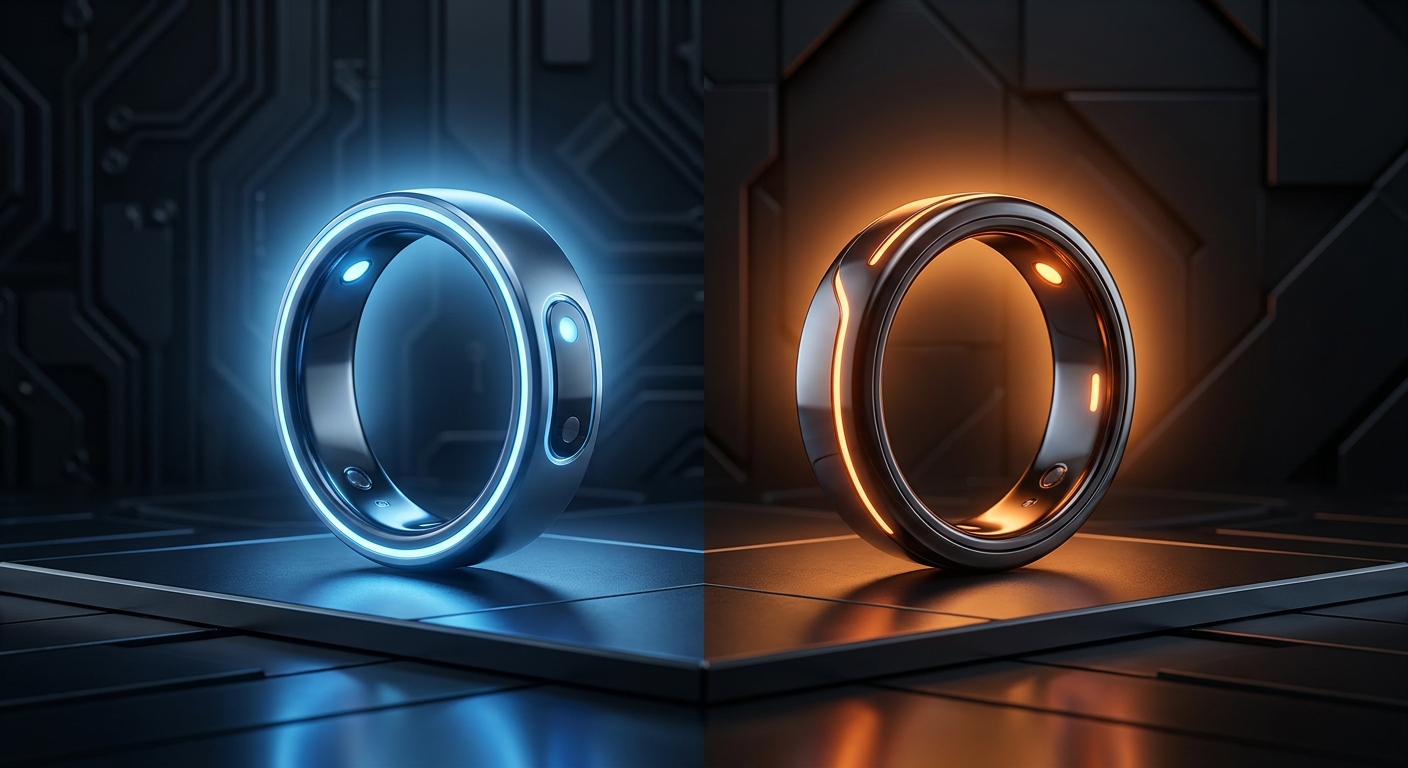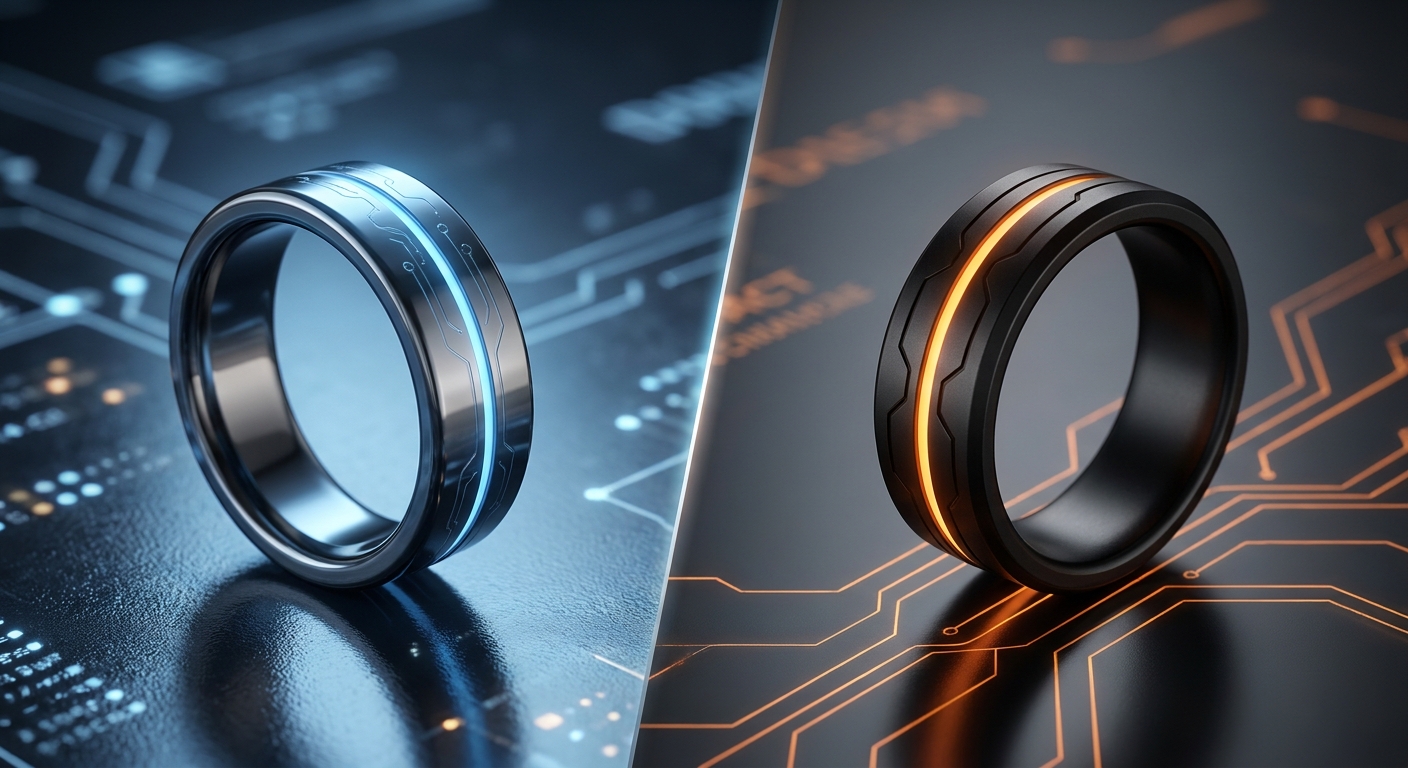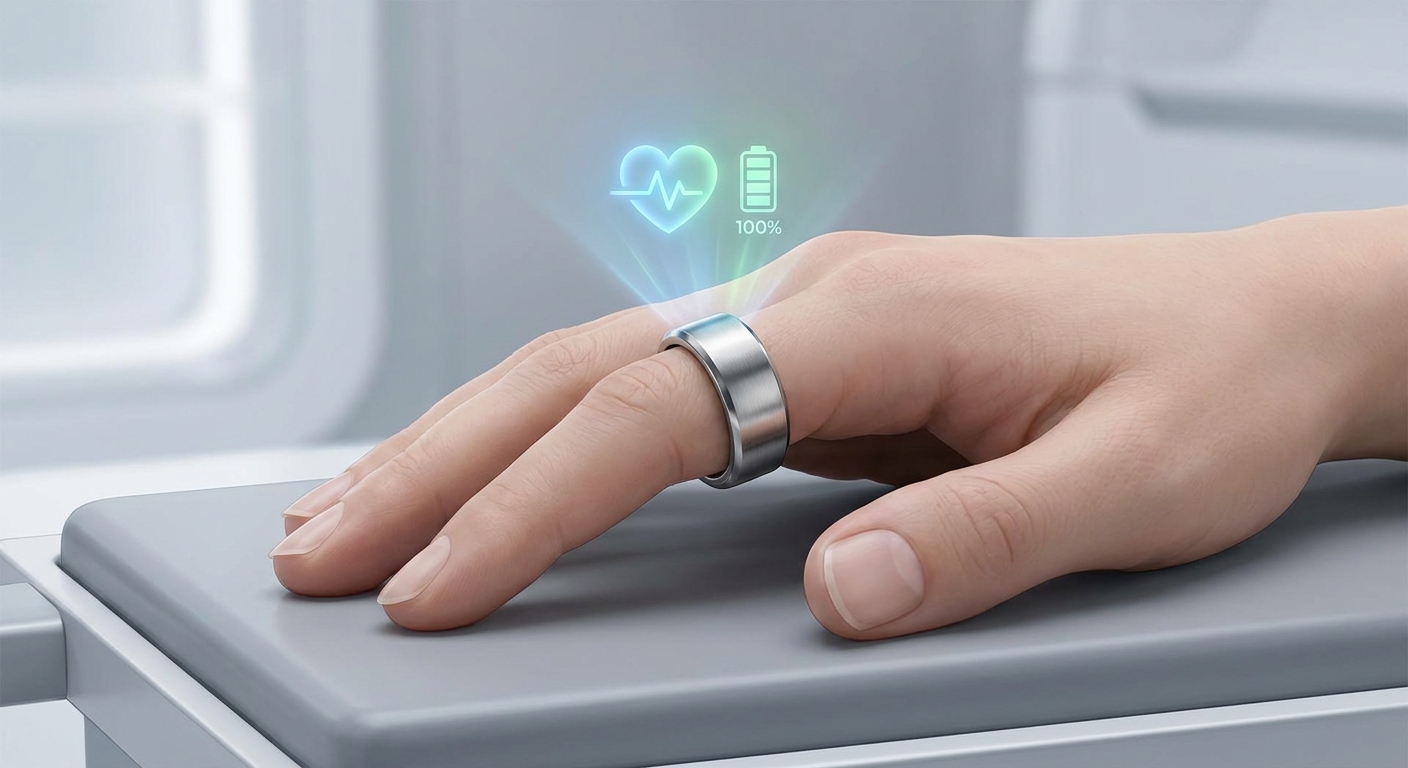

As a biomedical engineer who has spent the last eight years testing wearable health technology, I evaluate smart rings not just on their aesthetic appeal, but on their biometric precision, sensor accuracy, and data validation. Two of the most prominent contenders in the current market are the
Before we dig into the technical details, it is important to understand that wearing a biomedical tracker on your finger presents unique anatomical challenges compared to traditional wrist wearables. Let's see which device truly optimizes your continuous monitoring experience without compromising daily comfort.
Design and Material Durability
When evaluating form factor, we must consider both daily wearability comfort and long-term durability. The Oura Ring 4 features a sleek ceramic exterior with a titanium interior. It feels substantial yet comfortable for 24/7 wear.
While the Oura design is classic and jewelry-like, the ceramic finish can occasionally leave potential metal transfer marks on softer metals if they rub against it, meaning you should be mindful of wearing it adjacent to gold or silver rings.
The Samsung Galaxy Ring, constructed primarily of lightweight titanium, feels remarkably unobtrusive. For individuals unaccustomed to wearing rings, its featherlight presence is a significant advantage in terms of sensory adaptation.
In my laboratory scratch tests simulating daily wear and tear, both rings proved highly water-resistant and structurally sound. However, the concave design of the Samsung frame offers slight additional protection for the outer surface against accidental scrapes on doorknobs and gym equipment.
Health Sensor Accuracy and Tracking Metrics
The core of any smart ring lies in its sensor accuracy. Both devices utilize a PPG sensor (photoplethysmography), which shines an infrared LED into your skin to measure blood flow and calculate your heart rate and HRV (heart rate variability).
They also employ advanced accelerometers and gyroscopes to track movement and sleep staging. Understanding these biometric markers requires high-fidelity data capture, which is where the internal algorithms of these two brands diverge.
In my controlled testing, the Oura Ring 4 demonstrated exceptional biometric precision. It tracks over 50 health metrics, offering deep insights into your circadian rhythm, sleep architecture, and recovery metrics. The data validation against clinical equipment remains highly impressive, making it an incredible tool for biohackers.
The Samsung Galaxy Ring relies on AI-powered health insights to track sleep, fitness, and heart rate. It introduces helpful cycle tracking technology and intuitive workout detection. While highly accurate for general consumer use, its data presentation feels slightly more generalized compared to the granular detail Oura provides.
Battery Life and Charging Method
Battery optimization is a critical factor for continuous monitoring. If your device is constantly on the charger, you lose valuable data, resulting in incomplete trends and disrupted baseline averages.
Having uninterrupted data streams is especially important for overnight temperature tracking and HRV baselines, which are highly sensitive to missing measurement windows.
The Oura Ring 4 boasts a 5 to 8-day battery life, depending on whether features like continuous blood oxygen monitoring (SpO2) are enabled. It charges via a dedicated desk puck, which takes about 20-80 minutes to reach full capacity.
The Samsung Galaxy Ring advertises up to a 7-day battery life, though real-world testing often places it closer to 5 or 6 days with all tracking features active. Its standout feature is its charging case, which is incredibly elegant and resembles a wireless earbud case, making true on-the-go charging highly convenient.
App Ecosystem and Subscription Cost
The software experience and ongoing costs are where these two diverge significantly. You are not just buying hardware; you are buying into an ecosystem that you will interact with every morning.
Choosing the right platform dictates how actionable your health data will be. An overly complex app can cause fatigue, while an overly simplified one might not provide enough actionable guidance.
Can I use Oura without the monthly subscription? expand_more
Technically yes, but you will only have access to three basic daily scores (Readiness, Sleep, and Activity) without any of the granular breakdown, making the membership practically essential for full value.
The Oura app requires a monthly membership to access its full suite of 50+ health metrics and sync capabilities with 40+ third-party health apps. While this higher ongoing price point is a deterrent for some, the app provides unparalleled, highly personalized behavioral guidance.
This subscription model allows Oura to continuously update their algorithms, frequently pushing clinical-grade feature updates directly to the ring throughout its lifecycle.
Conversely, the Samsung Galaxy Ring requires no monthly subscription. This is an enormous advantage for cost-conscious consumers looking for a one-and-done hardware purchase. All metrics and AI insights are available out of the box.
However, it is strictly an Android-only device, functioning best within the Samsung Health ecosystem. If you are an iOS user, the Galaxy Ring is completely off the table, forcing a different decision entirely.
To summarize the core differences between these two exceptional wearables, we need to look at the baseline technical specifications side-by-side.
Reviewing these points helps clarify which device aligns best with your technological preferences and budgetary constraints.
| Feature | ||
|---|---|---|
| Material | Ceramic & Titanium | Titanium |
| Battery Life | 5-8 Days | Up to 7 Days |
| Subscription | Required Monthly | None |
| Compatibility | iOS & Android | Android Only |
| Key Focus | Comprehensive Health Insights | AI-Powered Fitness & Sleep |
Beyond raw specs, understanding how these devices fit into specific lifestyles is the final piece of the puzzle. Wearables are highly personal items, and the \"best\" device depends largely on what smartphone is in your pocket and how deeply you want to analyze your biology.
Consider your daily routine and budget when reviewing the breakdown of the most common user scenarios below.
| Use Case | Best Choice | Reason |
|---|---|---|
| iOS Users | Samsung Galaxy Ring is Android-only. | |
| Budget Conscious | No ongoing monthly subscription fee. | |
| Deep Data Nerds | Over 50 metrics with rigorous data validation. |
For final decisions, I highly recommend looking at the detailed metric breakdowns provided by the manufacturers themselves. If you are an iPhone user or deeply invested in recovery statistics,
Alternatively, if you are firmly planted in the Android ecosystem and want a subscription-free experience,