
Oura Ring Portfolio Review: Analyzing the Ecosystem and Key Models
As a biomedical engineer who has spent years testing wearable health technology, I’ve watched the smart ring market evolve from a niche curiosity into a serious clinical-adjacent tool. Oura has undoubtedly been the primary architect of this shift. While many competitors have since entered the space, Oura remains the benchmark against which others are measured, largely due to their mature data ecosystem and rigorous sensor validation.
In this portfolio review, I will dissect the current Oura lineup, focusing specifically on how their hardware and software ecosystem functions in real-world scenarios. We will look beyond the marketing claims to understand the practical value of their readiness metrics, the material differences between their models, and the reality of their subscription-based business model.
The Oura Ecosystem and App Interface
The strength of Oura lies not just in the hardware, but in how the software interprets raw biometric data. The app is built around three primary pillars: Readiness, Sleep, and Activity. Unlike many fitness trackers that push for higher activity regardless of your physiological state, Oura’s algorithms prioritize recovery.
From a data validation perspective, I appreciate the transparency of their metrics. The Readiness Score isn't just a random number; it is an aggregate of your resting heart rate (RHR), heart rate variability (HRV) balance, body temperature deviations, and previous night's sleep.
The interface is clean, avoiding the "data dump" problem common in health apps. However, it is crucial to understand that access to this deep analysis is gated.
Compatibility Check
Before investing in the hardware, ensure your device ecosystem is supported.- iOS: Fully supported (integrates with Apple Health).
- Android: Fully supported (integrates with Google Fit/Health Connect).
- Data Sync: seamless background syncing via Bluetooth Low Energy.
Flagship Analysis: Oura Ring 4 Ceramic
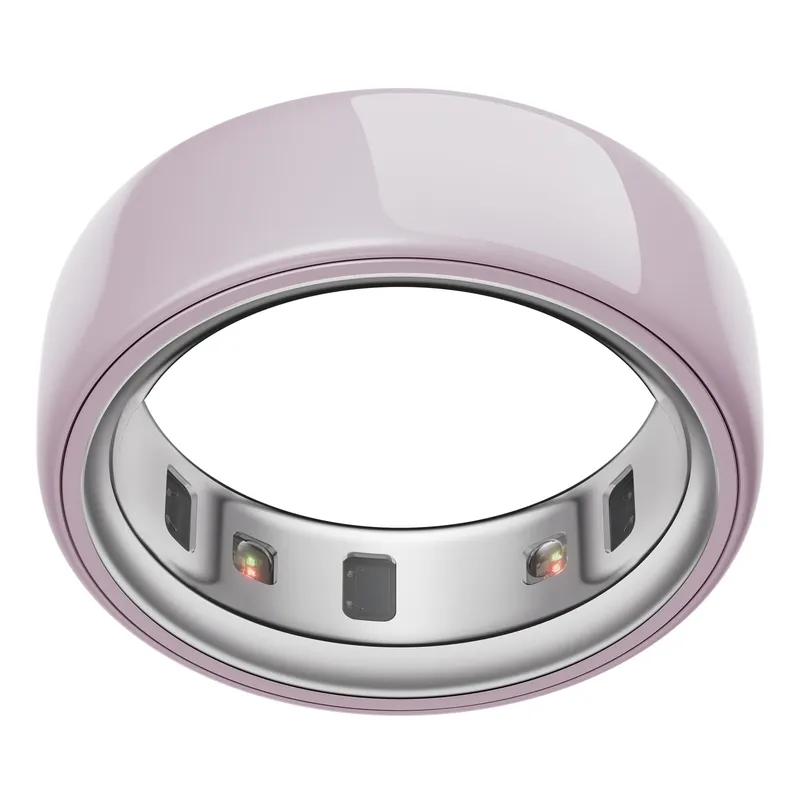
The Oura Ring 4 Ceramic represents the brand's push into the "jewelry-first" wearable space. From an engineering standpoint, housing sensitive electronics inside a ceramic shell is challenging due to the need for precise sensor windows, but Oura has executed this well.
Material and Build
The ceramic material is harder than the standard titanium coating, making it highly scratch-resistant. This is significant for a device worn on the finger, which comes into contact with hard surfaces constantly. The "Petal" and "Cloud" finishes offer a glossy, non-metallic look that appeals to users who want to avoid the tech-gadget aesthetic entirely.However, ceramic is brittle by nature. While it resists scratches better than metal, it can crack under high impact. I would recommend this model for users who prioritize aesthetics and daily office wear over those who might wear the ring while lifting heavy weights or rock climbing.
Sensor Integration
Despite the different housing, the sensor array remains identical to the standard models. You are paying for the finish and the material properties, not increased data accuracy. The smooth inner molding ensures that the PPG (photoplethysmography) sensors maintain good contact with the skin, which is critical for signal fidelity.The Standard: Oura Ring 4 Titanium
For most users, the Oura Ring 4 (Titanium) is the pragmatic choice. It houses the exact same technology—infrared LEDs for heart rate, accelerometers for movement, and NTC thermistors for temperature—but in a PVD-coated titanium chassis.
Watch: Oura Ring 4 - Black - Size 8
Durability and Utility
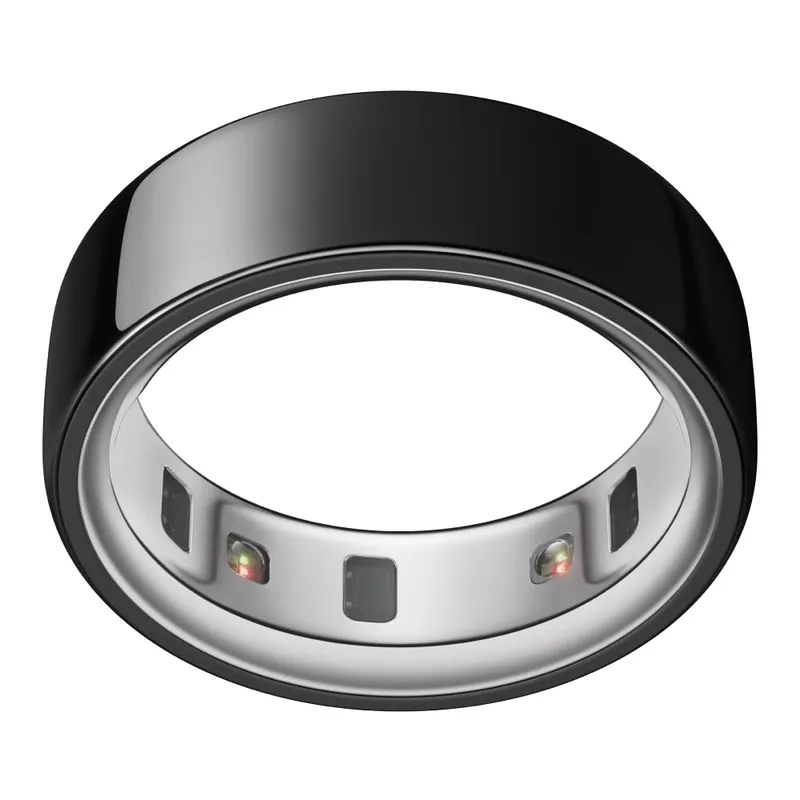
Titanium is lightweight and incredibly durable regarding impact. Unlike the ceramic model, it won't crack if dropped on a tile floor. However, the darker finishes like "Stealth" or "Black" can show micro-scratches over time, revealing the silver titanium underneath. In my testing, this "patina" is cosmetic and does not affect the ring's structural integrity or water resistance.The battery life on the standard model aligns with the ceramic version, offering roughly 5-8 days depending on whether you have features like continuous blood oxygen sensing enabled.
Comparison: Ceramic vs. Titanium
Both rings deliver the same health insights, so the choice comes down to physical properties and budget.
| Feature | Oura Ring 4 Ceramic | Oura Ring 4 Titanium |
|---|---|---|
| Primary Material | Zirconia Ceramic | Titanium with PVD Coating |
| Durability | High scratch resistance, lower impact resistance | High impact resistance, susceptible to surface scratches |
| Weight | Slightly heavier (approx. 4-6g) | Extremely light (approx. 4-6g) |
| Est. Price | ~$499 | ~$349 - $399 |
| Best For | Fashion-forward, office wear, sleep tracking | Active lifestyle, gym goers, outdoor sports |
Unique Selling Points: Sensors and Algorithms
What separates Oura from the flood of cheaper smart rings entering the market? It comes down to signal validation and algorithm maturity.
Temperature Sensing
Oura uses minute changes in skin temperature to predict illness and track menstrual cycles. In my experience, the temperature trends are impressively sensitive, often detecting a fever onset 24 hours before symptomatic expression. This is due to the NTC (Negative Temperature Coefficient) sensors precise calibration.Sleep Staging Algorithms
Oura recently updated their sleep staging algorithm to be more aligned with polysomnography (the gold standard of sleep lab testing). While no wearable is perfect, Oura's distinction between REM, Deep, and Light sleep is among the most consistent I have tested in a consumer device.Absence of Haptics
It is worth noting that Oura rings do not vibrate. They are passive data collectors. For some, this is a selling point—no phantom vibrations interrupting dinner. For others expecting notification alerts, this is a limitation.Verdict
The Oura ecosystem is mature, reliable, and scientifically grounded. If you are looking for actionable health insights and are willing to pay for the continuous data analysis, it remains the market leader for a reason.
Our Top Pick

OURA
Oura Ring 4 - Black - Size 8
For the majority of users, the Oura Ring 4 Titanium is the superior choice. It offers the exact same sensor accuracy and battery life as the Ceramic model but in a more durable, impact-resistant chassis that costs significantly less. Unless you are specifically attached to the ceramic aesthetic, the Titanium model provides the best balance of performance and practicality.
Frequently Asked Questions
Is the Oura Ring subscription really mandatory? expand_more
Technically no, but practically yes. Without the subscription, the ring only shows three simple scores (Readiness, Sleep, Activity) for the current day. You lose all historical data, trends, and detailed sleep staging, which renders the device significantly less useful for health tracking.
Can I wear the Oura Ring while lifting weights? expand_more
You can, but I recommend wearing a glove or removing it for heavy lifts. The knurling on barbells can scratch the titanium finish and chip the ceramic models. Additionally, gripping heavy weights with a ring can cause discomfort or "pinching" of the skin.
How accurate is the calorie tracking? expand_more
Like most wearables, calorie tracking is an estimate based on heart rate and movement. It is generally accurate for steady-state cardio (like running) but tends to underestimate exertion for anaerobic activities like strength training or HIIT.
Does the ring work with Apple Health and Google Fit? expand_more
Yes, Oura has robust two-way integration. It can write sleep and heart rate data to Apple Health/Google Fit and read workout data from them to adjust your Readiness score.